
What If I Don’t Know How to Use a Defibrillator?
This is one of the most common concerns people have when they see a defibrillator on a wall.
“What if something happens and I don’t know what to do?”
It is a completely natural question, especially in a high-stress, emotional situation. The good news is that you do not need medical training, technical knowledge, or prior experience to use a defibrillator.
Modern Automated External Defibrillators, or AEDs, are designed to guide you through the process step by step.
Designed for Ordinary People in Extraordinary Situations
Defibrillators are intentionally built for members of the public to use. The moment an AED is switched on, it begins giving clear, calm voice instructions that tell you exactly what to do next. These prompts are designed to reduce panic and remove uncertainty, allowing you to focus on helping the person in front of you.
What Happens When You Open an AED
Although designs vary slightly, AEDs supplied by DefibPro all follow the same simple principle.
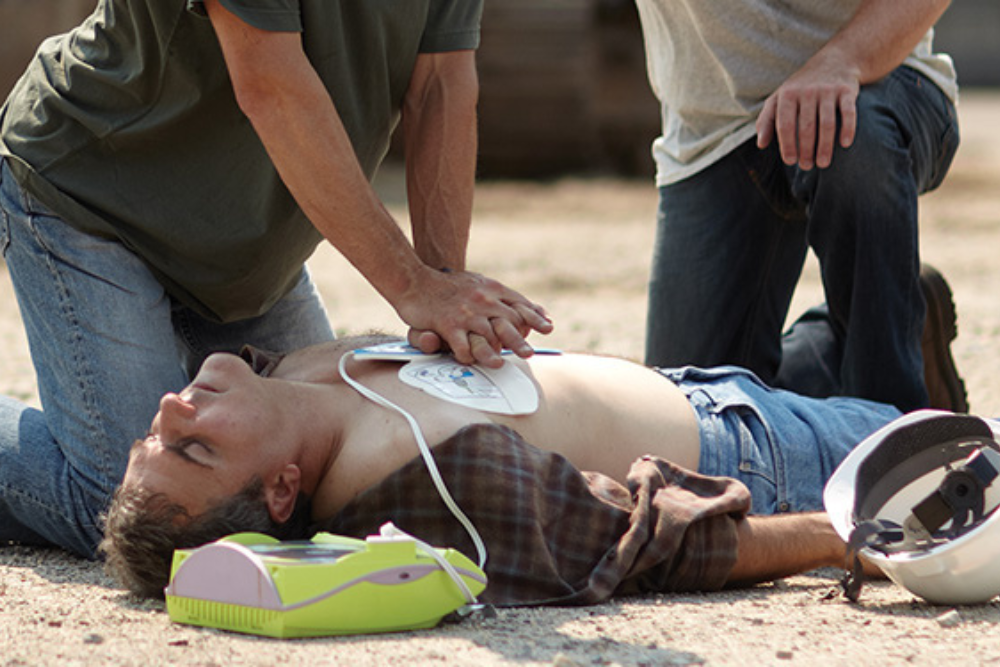
Once activated, the AED speaks to you clearly, tells you where to place the pads, analyses the casualty’s heart rhythm automatically, decides whether a shock is needed, and either instructs you to press a single button or delivers the shock automatically.
If a shock is not required, the device will not allow one to be given.
You cannot accidentally shock someone who does not need it.
Understanding Automation
For many people, the word “defibrillator” sounds technical and intimidating. In reality, modern AEDs do the thinking for you.
A semi-automatic AED analyses the heart rhythm and, if a shock is required, tells you exactly when to press a single flashing button.
A fully automatic AED goes one step further and delivers the shock on its own after clearly instructing everyone to stand clear.
Both options are safe, effective, and designed to support untrained users in a real emergency.
Why Doing Something Is Better Than Doing Nothing
One of the biggest barriers to action is fear of getting it wrong.
In a cardiac arrest, the greatest risk comes from delay. An AED will not deliver a shock unless it is needed. It will guide you through every step, prompt you when to act, and support you when stress makes thinking difficult.
Attempting CPR and early defibrillation gives the person their best possible chance of survival.
Equipment Chosen for Real Emergencies
At DefibPro, the products we supply are selected with real-world use in mind.
All of our defibrillators are clear, intuitive, and suitable for public access environments. They use calm voice prompts, visual indicators, and straightforward automation so that anyone can step forward and help, even under pressure.
Access Matters as Much as Confidence
Knowing how to use a defibrillator is only part of the picture.
It must also be easy to find, easy to access, and ready when needed. Clear signage, suitable cabinets, and sensible placement all play a crucial role. A defibrillator that is locked away, hidden, or difficult to access may as well not be there at all.
When Seconds Matter Most
When a cardiac arrest happens, there is no time to hesitate.
You do not need to be a medical professional.
You do not need to be trained.
You simply need to press the on button and follow the instructions.
Modern defibrillators are designed to support you when someone’s life depends on it. The device takes control, guides you calmly, and only acts when it is safe and necessary.
In those first critical minutes, doing something is always better than doing nothing.
Because the defibrillator will tell you what to do.
And that action could save a life.

Leave a comment
This site is protected by hCaptcha and the hCaptcha Privacy Policy and Terms of Service apply.